tech
Researchers spot Saturn-sized planet in the “Einstein desert”
Rogue, free-floating planets appear to have two distinct origins.
TL;DR
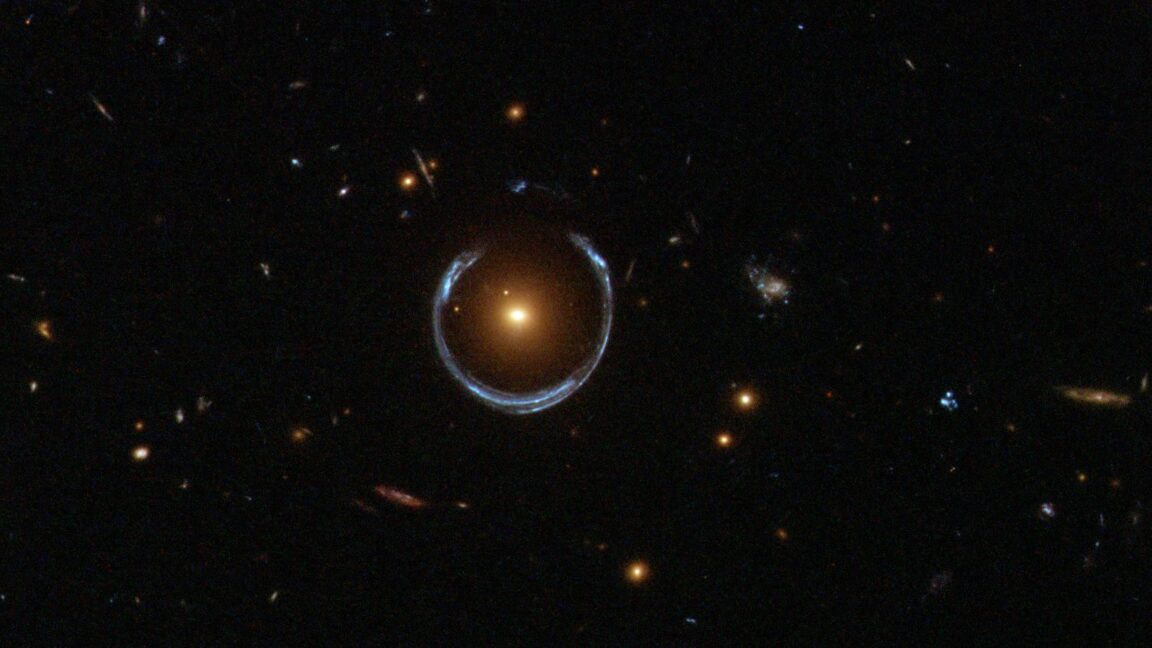
- Microlensing is a method used to detect exoplanets, particularly rogue planets that drift through interstellar space.
- A Saturn-sized planet has been discovered using microlensing, falling into the "Einstein desert"—a gap in observed planetary sizes.
- Rogue planets can form either by being ejected from a star system through gravitational interactions or by forming independently like stars, but with insufficient mass.
- The Gaia space telescope's unique observation angle and distance provided crucial data, including parallax, to determine the planet's mass and distance.
- The discovery supports theories about the Einstein desert representing a size distinction between planets ejected from systems and those formed independently.
- Further observations are needed to definitively confirm the reality and significance of the Einstein desert due to the rarity of microlensing events.